
Hair Fibers vs Hair Powder: Which Scalp Concealer Actually Stays Put?
If you’ve searched for a way to cover thinning hair, you’ve met both camps: shake-on keratin fibers and pressed mineral-style powders. The hair fibers vs hair powder question sounds like a coin flip — both are cosmetic concealers, both work in minutes, both wash out. But they behave very differently the moment you leave the bathroom, and the difference comes down to one thing: what actually stays put on a real day.
Thinning is common enough that this decision matters to a lot of people — the American Academy of Dermatology estimates that millions of Americans experience hereditary hair loss — and most of them aren’t choosing between concealer and nothing. They’re choosing between concealers. So let’s compare fairly.
One thing up front: neither product treats anything. Fibers and powders alike cover the appearance of thinning hair and visible scalp. Nothing you shake or press onto your head prevents hair loss or regrows hair — and any product implying otherwise deserves your skepticism.
Hair fibers vs hair powder: how each one works
Keratin hair fibers are tiny loose filaments, usually keratin from wool, that you shake over a thin spot like seasoning. They carry a static charge that makes them cling to your existing strands, fattening each one so the area reads denser. Many people set them with a companion holding spray.
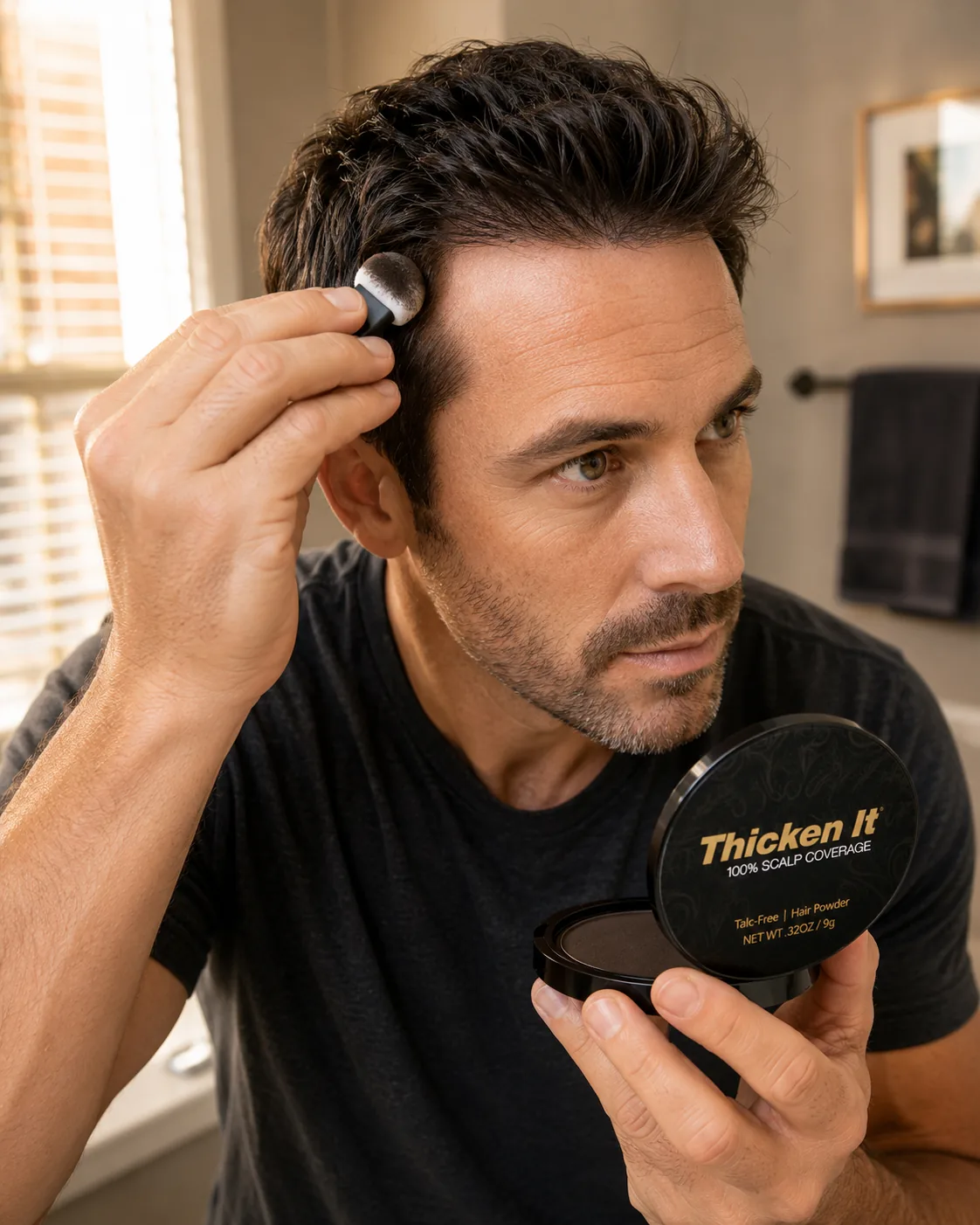
Hair powder — the category Thicken It belongs to — is pigmented fiber pressed into a compact, applied with a small foam paddle. Instead of loosely dusting filaments over your strands, you press pigment directly onto both the hair and the scalp beneath it. The scalp stops reflecting light, the hair gains visual weight, and the thin spot loses the contrast that made it noticeable.
Same goal, different mechanics: fibers rely on static cling to strands they land on. Powder is pressed in, which changes everything about how it holds.
The staying-put test: wind, sweat, and touch
Here’s where the two paths split.
Loose fibers sit on the hair, held by static. That works beautifully in a still bathroom. It works less well in the wind that hits you in a parking lot, under a motorcycle helmet or a hat that rubs, or on a humid afternoon when your scalp sweats. Static is a fragile bond, and fiber users learn the maintenance rituals — carry the bottle, reapply after the gym, keep your hands out of your hair, watch the shoulders of dark shirts on dry days and light shirts on windy ones.
Pressed powder bonds differently. Because it’s pushed onto the strand and the scalp rather than dusted over the top, there’s nothing loose sitting on the surface waiting for a breeze. Thicken It’s cotton-fiber formula is water resistant once pressed in and smoothed — it holds through sweat, humidity, rain, and even a swim in plain water. (Water resistant, not waterproof: it comes out the way it should, with shampoo and a good lather, and heavy towel-scrubbing on one spot can lift some of it — blot instead.)
The honest scoreboard on hold: powder wins on wind, sweat, rain, hats, pillows, and hands running through your hair. Fibers, applied heavily and sprayed, can look slightly fuller in a photo taken right after application — that’s their best moment. The question is which product still looks like that at 6 p.m.
The hairline problem
Every scalp concealer faces its hardest test at the hairline and part — the edges, where covered area meets bare skin in the most-examined inch of your face.
Shaken fibers are hard to control at an edge. They land where gravity takes them, which at the hairline includes your forehead, and a fiber-speckled forehead is exactly the “is he wearing something?” tell this whole category exists to avoid. Spray applicators help but add overspray of their own.
A paddle applicator is a precision tool by comparison. You press powder exactly where the thinning is — along a widening part, into the two corners of a receding hairline, over a crown swirl — and stop exactly where you want coverage to stop. Then you feather the boundary with a fingertip. No drift, no speckle, no cleanup on your forehead.
(Application images shown are AI-generated demonstrations of cosmetic coverage. Thicken It covers the appearance of thinning hair and visible scalp; it does not treat, prevent, or regrow hair.)
Everyday practicality
A few quieter differences add up over a month of mornings.
Mess. Shake-on application means fibers on the sink, the counter, and the floor of anyone who’s done it hurried. A pressed compact opens, applies, and closes — the powder only goes where the paddle puts it.
Portability. A loose-fiber bottle in a purse or gym bag is a spill risk with a childproof feel. A mirrored compact is built for exactly that trip — it’s the same form factor as pressed face powder, and touch-ups happen anywhere there’s two minutes and a mirror.
Scalp-only spots. Fibers need existing strands to cling to, so they struggle where hair is very sparse and plain scalp shows — the exact spot many people most want covered. Pressed powder colors the scalp itself, so coverage doesn’t depend on how much hair is left to catch it.
Shades. Thicken It comes in Dark Brown, Black, Light Brown, and Red. Match the shade to the hair around the thin spot; if you fall between two, take the darker one and apply lightly.
Frequently asked questions
Are hair fibers or hair powder better for a receding hairline?
Powder, in our experienced opinion — edge control is its strength, and the hairline is all edges. Press, feather, done.
Do either of them treat thinning or regrow hair?
No. Both are cosmetics. They change how thinning looks, not what your follicles do. If your hair loss is sudden or patchy, talk to a dermatologist about the cause — and use coverage in the meantime if it helps you feel like yourself.
Can I swim or work out with hair powder on?
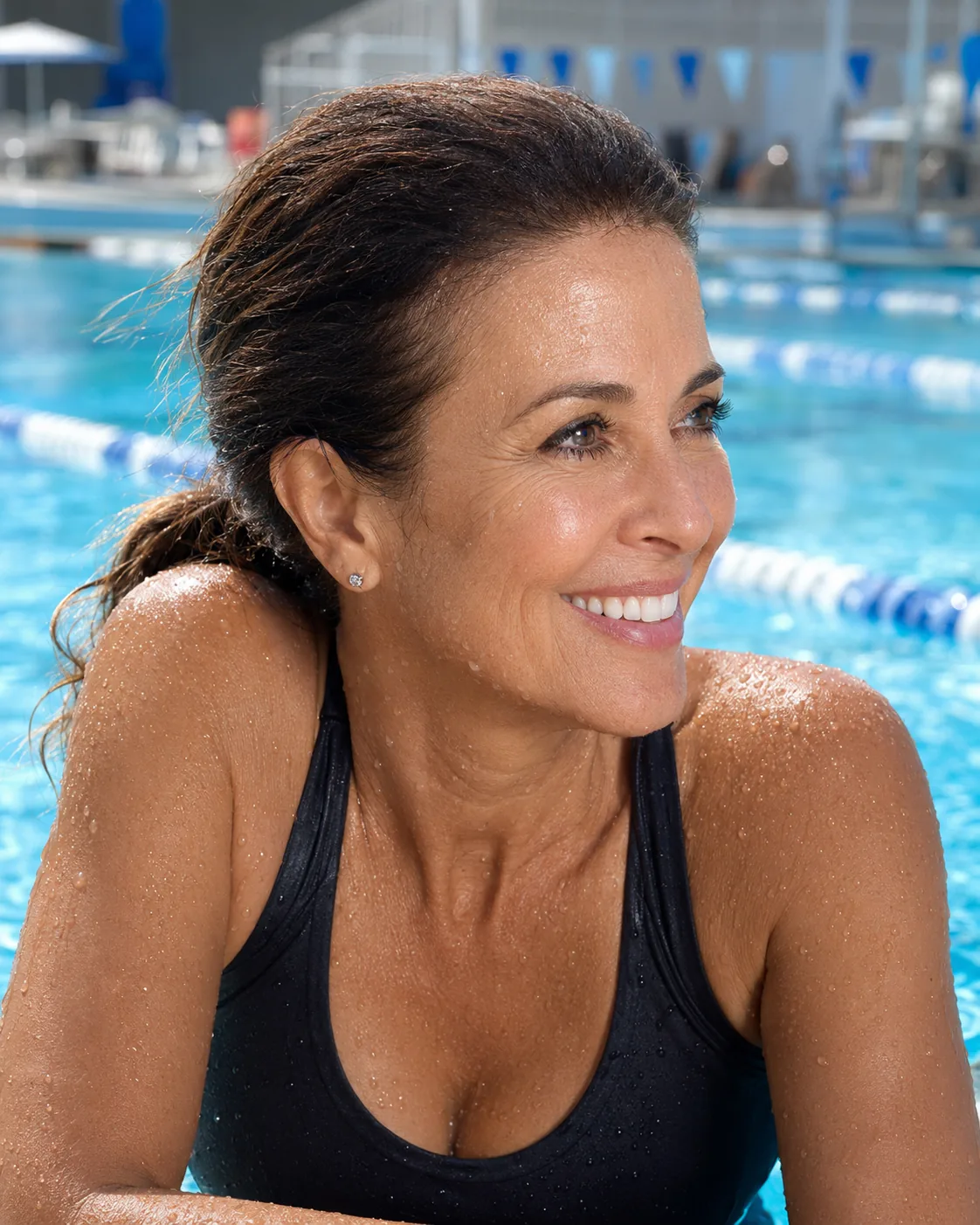
Yes — Thicken It is water resistant and holds through sweat and plain-water swimming. It shampoos out fully afterward.
Will powder rub off on my pillow?
Pressed in and smoothed, it holds through a night’s sleep. Loose anything — fibers or over-applied powder — is what transfers, so build thin layers and smooth the surface.
Is hair powder safe to use every day?
It’s a talc-free cosmetic that washes out with shampoo, so daily wear is a styling choice, like any other makeup.
The concealer you stop thinking about
The best scalp concealer is the one you forget you’re wearing — no reapplication rituals, no forehead speckle, no glancing at your shoulders. Press it in once in the morning, and let the day happen.
Ready for coverage that stays put? Shop Thicken It 100% Scalp Coverage Powder →
Related reading: Receding Hairline Coverage for Men · Water Resistant Hair Powder: Does It Survive Sweat and Swimming? · Covering Bald Spots from Pattern Baldness: A Realistic Guide for Men · Widening Part Line? How to Make It Disappear in Seconds