
Scalp Powder, Sweat, and Workout Days: Does Coverage Survive the Gym?
It’s the question that stops a lot of people from buying: will scalp powder sweat off the moment you get your heart rate up? It’s a fair thing to ask. Nobody wants to be forty minutes into a spin class wondering what’s happening at their part line — and nobody wants to check a mirror afterward and find out.
The short answer is that it holds, and it holds better than most people expect. The longer answer is more useful, because what actually lifts coverage isn’t sweat at all.
What scalp powder sweat resistance actually means
Thicken It is a pressed cotton fiber powder. When you press it onto the scalp and the hair around a thin area, the fiber grips — it isn’t sitting loose on the surface waiting to be rinsed away. That’s what makes it water resistant.
Water resistant is not waterproof, and we’d rather be straight with you about the difference. Coverage holds through sweat, humidity, rain, and even a swim. It comes out with shampoo and a proper lather, which is exactly what you want from something you’re putting on your head every morning.
So on a workout day, the water itself is rarely the problem. Friction is.
The real enemy is the towel, not the sweat
Here’s the pattern almost everyone discovers eventually: the coverage survives an hour of hard effort, then disappears in four seconds at the sink.
Rubbing is what lifts fiber. A towel scrubbed back and forth across a damp scalp, a headband dragged off in one motion, fingers raking through wet hair — those do far more than the sweat ever did. Once you know that, the fix is almost embarrassingly simple.
Blot, don’t rub. Press a towel against your hairline and lift it straight off. Slide a headband forward off your face rather than yanking it up over the crown. Let your hair air-dry a minute before touching it.
That’s the whole technique. The people who say coverage lasts all day and the people who say it doesn’t are usually doing exactly these two things differently.
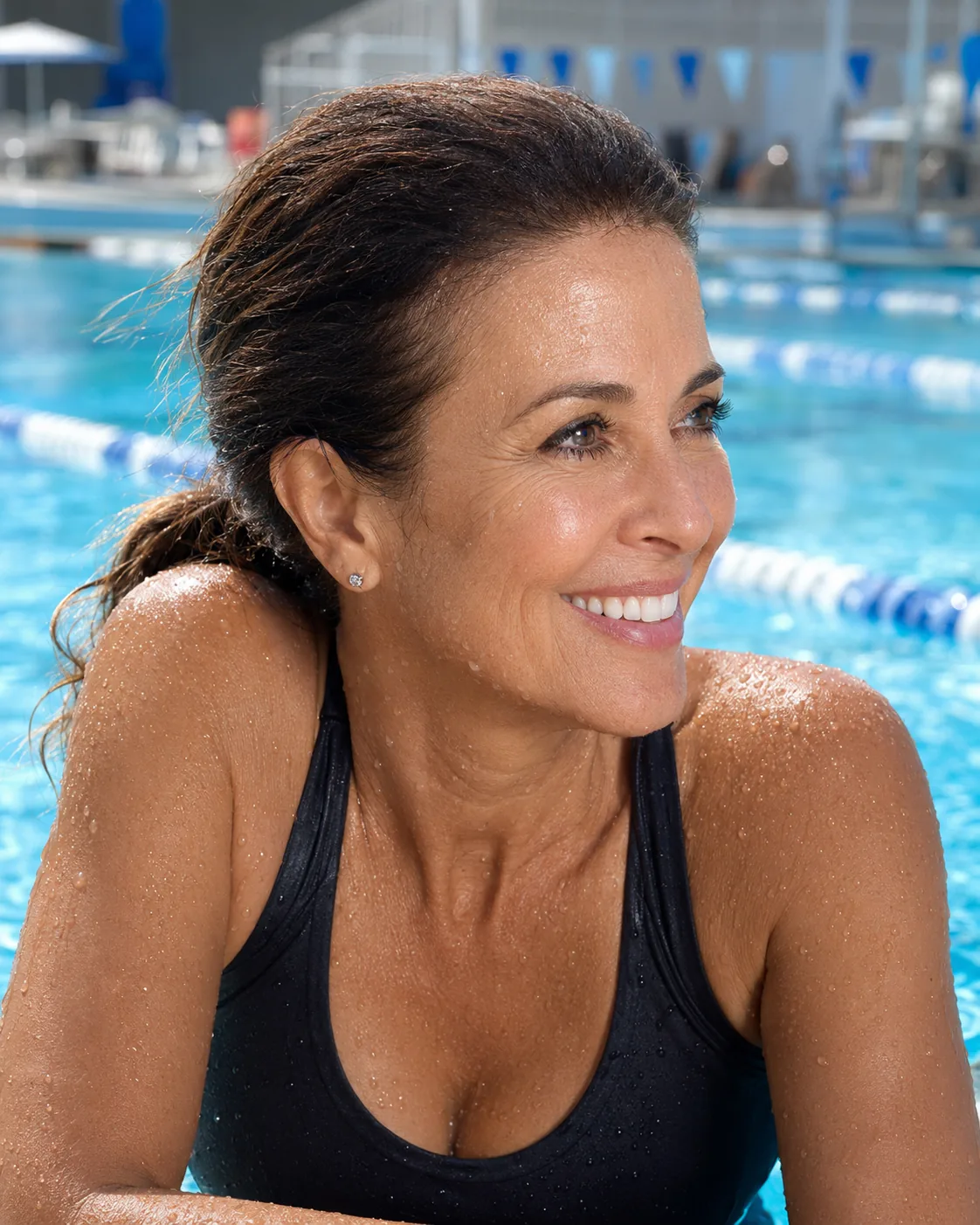
A workout-day routine that actually works
Before you go:
- Style your hair the way you’ll wear it — ponytail, bun, cap — then cover. Tension moves everything, so covering first means covering the wrong spots.
- Tap the applicator, don’t scoop. Press it flat onto the exposed scalp and lift. Press, never sweep.
- Smooth the edges with a fingertip and give it a minute to settle before a hat or headband goes on.
During:
Leave it alone. Sweat at the scalp evaporates and wicks along the hair; it doesn’t dissolve a fiber powder that’s been pressed in. Resist the urge to check with your hands — that’s friction again.
After:
If you’re showering and shampooing, you’re starting fresh anyway, so just reapply afterward on dry hair. If you’re heading straight to work or errands, blot the hairline dry, then press a small amount back over the part and temples. Ten seconds, no mirror gymnastics required.
(Lifestyle and results imagery on this page are AI-generated demonstrations of cosmetic coverage. Thicken It covers the appearance of visible scalp and thinning hair; it does not treat, prevent, or regrow hair.)
Hats, helmets, and hot yoga
Three situations come up often enough to deserve their own note.
Caps and visors. A hat brim sits right where a thinning hairline shows, and taking it off is a rub-and-lift motion. Slide it forward and off, not back over the crown, and you’ll keep the front intact.
Bike and gym helmets. Straps press against the temples, which is a common thin area. Press powder in and let it sit a full minute before strapping up, and blot rather than wipe when you take the helmet off.
Hot yoga, saunas, and steam. Heavy, sustained heat with nowhere for moisture to go is the toughest test on this list. Coverage generally holds, but plan on a quick touch-up afterward rather than assuming — and bring the compact.

About washing after a workout
One honest aside, because it comes up: dermatologists generally suggest showering soon after exercise rather than sitting in sweat, since sweat, oil and bacteria on the skin can contribute to breakouts.
A cosmetic coverage powder doesn’t change that advice in either direction. It isn’t a treatment, it isn’t skincare, and it has no bearing on your scalp’s health — it covers appearance and washes out. Shower on whatever schedule suits your skin and your hair, and reapply afterward. Nothing about the powder asks you to skip a wash, and if a scalp concern is bothering you, that’s a question for a board-certified dermatologist rather than a cosmetic.
Frequently asked questions
Will it run down my forehead?
No. It isn’t a liquid or a wax, and it doesn’t melt. It’s pressed fiber that stays where the applicator put it — which is why the failure mode is rubbing, not dripping.
Will it stain a headband or a pillowcase?
Properly pressed and smoothed, it stays put. If a little transfers, it comes out in a normal wash. Use less product and smooth the edges and transfer essentially stops.
Can I apply it to sweaty hair mid-workout?
It’s better on dry or blotted hair. On a genuinely wet scalp the powder can clump instead of gripping. Blot first, then press — the ten seconds are worth it.
Which shade holds up best?
All four — Dark Brown, Black, Light Brown and Red — are the same formula and perform identically. Match the hair around the thin area, and when you’re between two shades, take the darker one and apply lightly.
Go work out
You shouldn’t have to choose between a good session and looking like yourself afterward. Press it in, blot instead of rub, keep a compact in the gym bag, and the question of whether scalp powder sweat-proofs your morning stops being a question at all.
Ready to put it to the test? Shop Thicken It 100% Scalp Coverage Powder →
Related reading: Water Resistant Hair Powder: Does It Survive Sweat and Swimming? · Ponytail Thinning Coverage: Hiding the Gaps a Pulled-Back Style Reveals · The Purse Touch-Up Kit That Goes Everywhere You Do · How to Match Scalp Powder Shade to Your Hair