
Gray Hair Coverage Without the Dye: How Scalp Powder Works
Gray hair coverage used to mean one thing: dye. Block off two hours, sit through the smell, hope the shade comes out right, and then watch silver creep back along your part in two weeks anyway.
There’s a simpler option — and it takes about two minutes at your bathroom mirror.
What gray hair coverage powder actually is
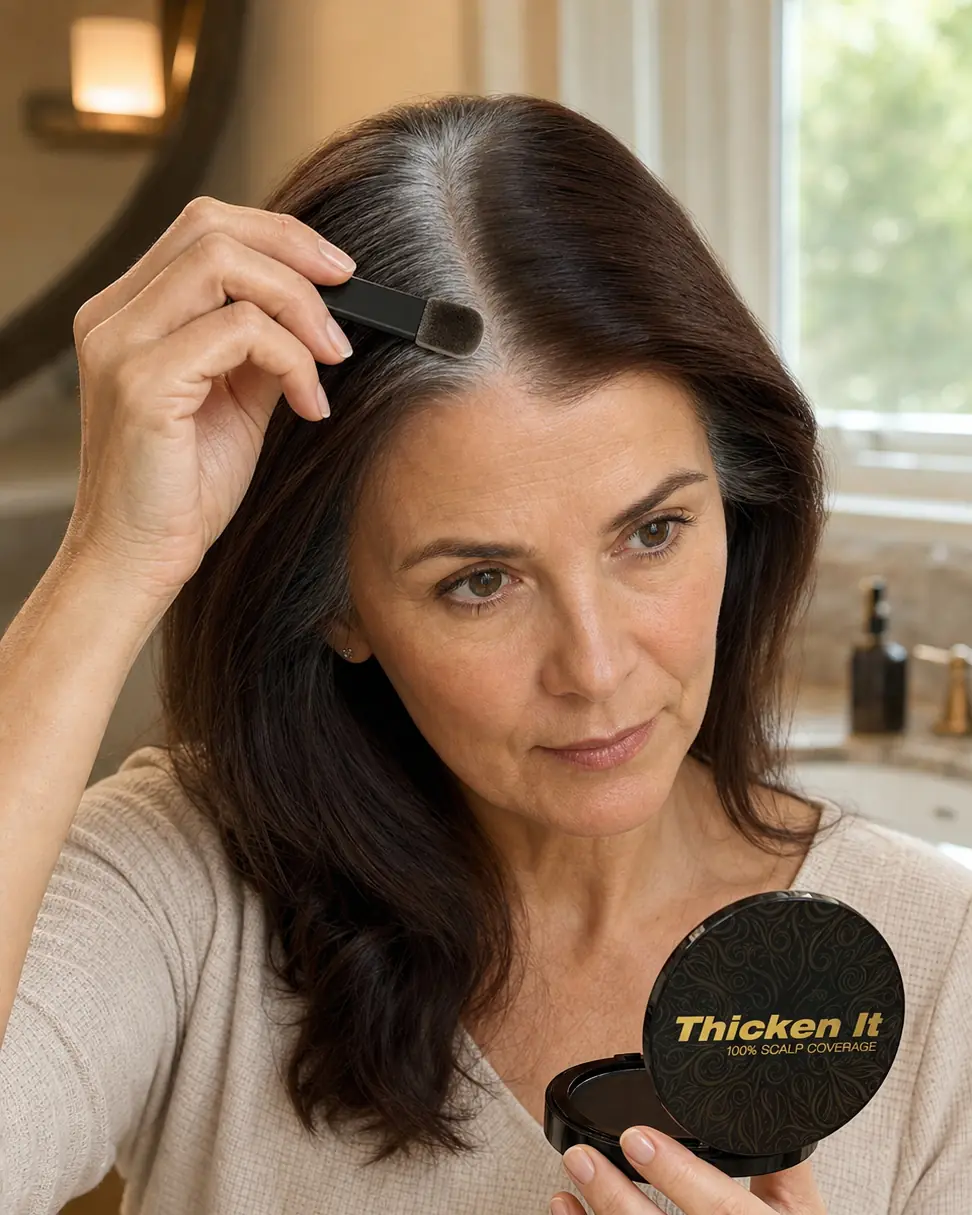
Thicken It is a talc-free powder made from pressed cotton fibers infused with color pigment. Instead of chemically changing your hair the way dye does, the powder adheres to your existing hair and to the scalp underneath, blending gray strands into the rest of your color. It covers any scalp showing through at the same time, so hair reads fuller as well as more evenly colored.
Because nothing is being processed or altered, there’s no commitment. The pigment stays put through wind, humidity, sweat, and even swimming — then washes out completely the next time you shampoo.
One important thing to be clear about: this is a cosmetic. It covers the appearance of gray and of visible scalp. It does not treat, prevent, or regrow hair, it doesn’t slow down graying, and it isn’t a dye — nothing about your actual hair color changes.
Why women choose powder over dye for gray coverage
It’s instant. Press the applicator onto the grays, blend, done. No 45-minute processing time, no appointment three weeks out.
It’s precise. Most gray doesn’t arrive all at once. It shows up at the temples, along the part, around the hairline. Powder lets you cover exactly those spots without re-coloring your whole head.
It’s not a chemical process. No ammonia, no peroxide, no developer sitting on your scalp for half an hour. If you’d rather read the ingredient list yourself, do — it’s short, and we’d rather you check than take our word for it.
It’s reversible. Every other gray solution asks you to commit for weeks. This one ends whenever you decide, in the shower.
Why gray hair is harder to cover than it looks
It helps to understand what you’re actually up against.
Gray hair isn’t white paint on a strand — it’s hair that has lost its pigment, and it behaves differently from the hair around it. Hair goes gray as the pigment cells in the follicle gradually stop producing melanin, a normal part of aging that MedlinePlus notes typically begins in your 30s and is largely determined by genetics.
Those unpigmented strands are also often coarser and more wiry, so they don’t lie flat with the rest of your hair. They catch light and stand slightly proud of the surface. That’s why five gray hairs at the temple can look like fifty, and why covering gray is as much about knocking down brightness as it is about adding color.
Powder handles both at once. It deposits pigment onto the strand and darkens the pale scalp showing between strands, which is the part most people never think about until it’s fixed.
How to apply it (the two-minute version)
- Start with dry, styled hair. Style first, cover second — tension moves everything.
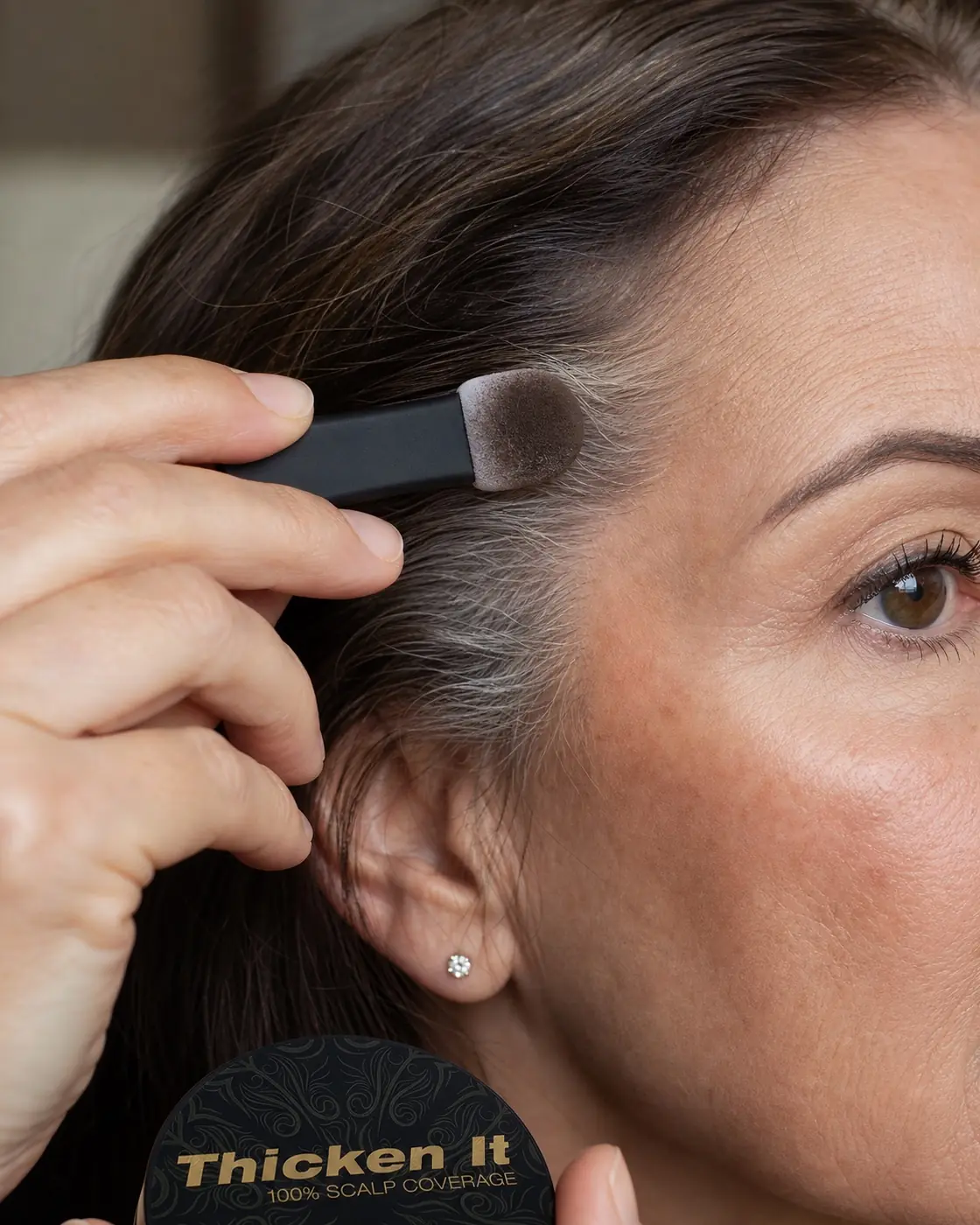
- Open the compact and load the slim foam applicator with a small amount of powder. Tap off the excess against the rim.
- Press — don’t swipe — onto the gray areas, working along your part and hairline.
- Blend the edges with light dabs until the color transition disappears.
- Check the mirror in natural light. Add a second pass anywhere silver still peeks through.
That’s the whole routine. The compact has a built-in mirror, so it works just as well in a parking lot as it does at home.
Powder vs. dye: when each one makes sense
Dye still has its place. If you want to change your overall color, powder can’t do that, and it isn’t trying to.
Where powder wins is everything around the edges of a color routine: the gap between salon visits, the first grays you’re not ready to commit over, the morning you notice your part in a photo, or the decision to skip chemical processing entirely. Plenty of women use both — color at the salon every couple of months, Thicken It in the purse for everything in between.
It’s also genuinely useful if you’re growing your gray out on purpose. During those awkward months you can soften the demarcation line without undoing your decision, and stop any day you like.
Find your shade
Thicken It comes in four shades made to blend with natural hair color: Dark Brown, Black, Light Brown and Red. Dark Brown is the most popular and the safest default for medium to deep brown hair.
Match the hair immediately around the gray, not your ends, and check it in daylight rather than under a warm bathroom bulb. When you’re between two shades, take the darker one and apply lightly — a too-light powder is the one that reads chalky.
Frequently asked questions
Does it work on white hair?
Yes. Fully white hair is the most reflective, so it takes a slightly firmer press and a second light pass. Work in thin layers rather than trying to cover it in one go.
Will it rub off on my pillow or my collar?
Pressed in properly and smoothed, it stays where you put it. It’s water resistant — not waterproof — so it holds through sweat, humidity and rain, but friction is a different matter. Blot rather than rub, and if a little transfers, it washes out normally.
How long does a compact last?
That depends entirely on how much area you’re covering. Someone touching up a part line most mornings will get months out of one; covering a full crown daily uses more.
Will it interfere with my next color appointment?
No. It shampoos out completely and sits on the surface, so it has no effect on how color takes. Wash it out before your appointment as you normally would.
Is it safe on a sensitive scalp?
We won’t make a skin-health claim. It’s talc-free and built on pressed cotton fiber, and the full ingredient list is on the product page — if you have a known sensitivity or a scalp condition, check the list and ask your dermatologist.
Let the gray be your decision
Gray hair coverage shouldn’t run your calendar. Two minutes, a compact in your bag, and the choice of when to show your silver goes back to being yours.
Ready to see your gray disappear in seconds? Shop Thicken It 100% Scalp Coverage Powder →
Related reading: How to Cover Gray Roots Between Salon Visits · Hair Fibers vs Hair Powder: Which Scalp Concealer Actually Stays Put? · How to Match Scalp Powder Shade to Your Hair · Root Touch-Up at Home: Between-Salon Coverage for Women