
Event Day Hair Coverage: Weddings, Reunions and Photo Days
Event day hair coverage has one job that a normal Tuesday doesn’t ask of it: hold up to hours of close-range attention. A wedding, a reunion, a milestone photo day — these aren’t quick errands where nobody’s looking closely. You’re seated for a long dinner, hugging people you haven’t seen in years, dancing, crying a little during the toasts, and standing for photo after photo under lighting that isn’t your bathroom mirror. If covering visible scalp or a thinning crown is already part of your routine, event days are where you want to know exactly how it holds, not hope.
The good news is that a pressed scalp powder was built for exactly this kind of long, high-contact day. It just helps to know what’s actually being tested.
(Imagery on this page is an AI-generated demonstration of cosmetic coverage. Thicken It covers the appearance of visible scalp and thinning hair; it does not treat, prevent, or regrow hair.)
What makes event day hair coverage different
Three things separate a wedding or reunion from an ordinary day out.
Time. A normal touch-up has to last through a workday. An event day has to last eight, ten, sometimes twelve hours — ceremony, cocktail hour, dinner, dancing, the after-party photos nobody planned for.
Proximity. People stand close at events. Receiving lines, seated dinners, dance floors, group hugs — you’re at conversational distance with the crown of your head visible from above more often than any other day of the year.
Documentation. Someone is always holding a camera. Photo days multiply the number of angles and the number of times a single moment gets frozen and looked at again later.
None of that requires doing anything differently — it just means the small habits matter more than usual.
Camera flash and daylight show different things
Flash photography and bright event lighting tend to flatten shadows and pick up shine in a way that soft daylight doesn’t. That’s not a flaw in your coverage; it’s a property of the light. A crown or part that looks perfectly even walking around the venue can read slightly differently in a flash-lit photo, the same way flash photography tends to show more texture and sheen on skin generally.
The fix isn’t more powder — it’s the same advice we give for avoiding over-application: press in thin, even layers and check yourself in a mirror with natural or soft light before the harsher event lighting takes over, rather than trying to compensate for a photo you haven’t taken yet.
Outdoor events add humidity to the list
If any part of the day is outdoors — a garden ceremony, a backyard reunion, a rooftop cocktail hour — humidity is doing something to everyone’s hair whether they’ve thought about it or not. Water molecules in humid air form temporary bonds with the keratin in hair, which is the actual mechanism behind frizz and why a good hair day can unravel outdoors, as Smithsonian Magazine explains. That’s a hair-texture issue, not a coverage issue — a pressed powder holds through humidity once it’s set — but it’s worth knowing your hair may behave differently by hour six than it did at hour one, so a quick mirror check before formal photos is a good habit regardless of shade or style.
The parts of the day that actually test coverage
Two things put real pressure on coverage over a long event: friction and moisture. Hugging, a scratchy dance-floor sweater, a flower crown, or an emotional hour of hugging relatives all bring friction into contact with the hairline and crown. Happy tears, a humid tent, or a few songs on the dance floor bring moisture.
Once it’s pressed in, the powder is water resistant — it holds through sweat, humidity, and the occasional happy-cry. But resistant isn’t waterproof, and friction is the real limit: a firm hug won’t disturb it, but repeated rubbing at one spot eventually will, the same way it would with any pressed cosmetic. Our water resistance guide covers the full breakdown, and the short version for event days is the same one we give for workouts: blot if you need to, don’t rub, and it comes off completely and on purpose with shampoo at the end of the night.
Build the timing into your hair and makeup schedule
If you’re working with a stylist or doing your own hair and makeup before an event, apply scalp coverage after your hairstyle is set and before you get into your outfit — tension from pinning, teasing, or an updo can shift powder, so let the style settle first. Set your part or crown coverage, then do a final press once everything is pinned into place.
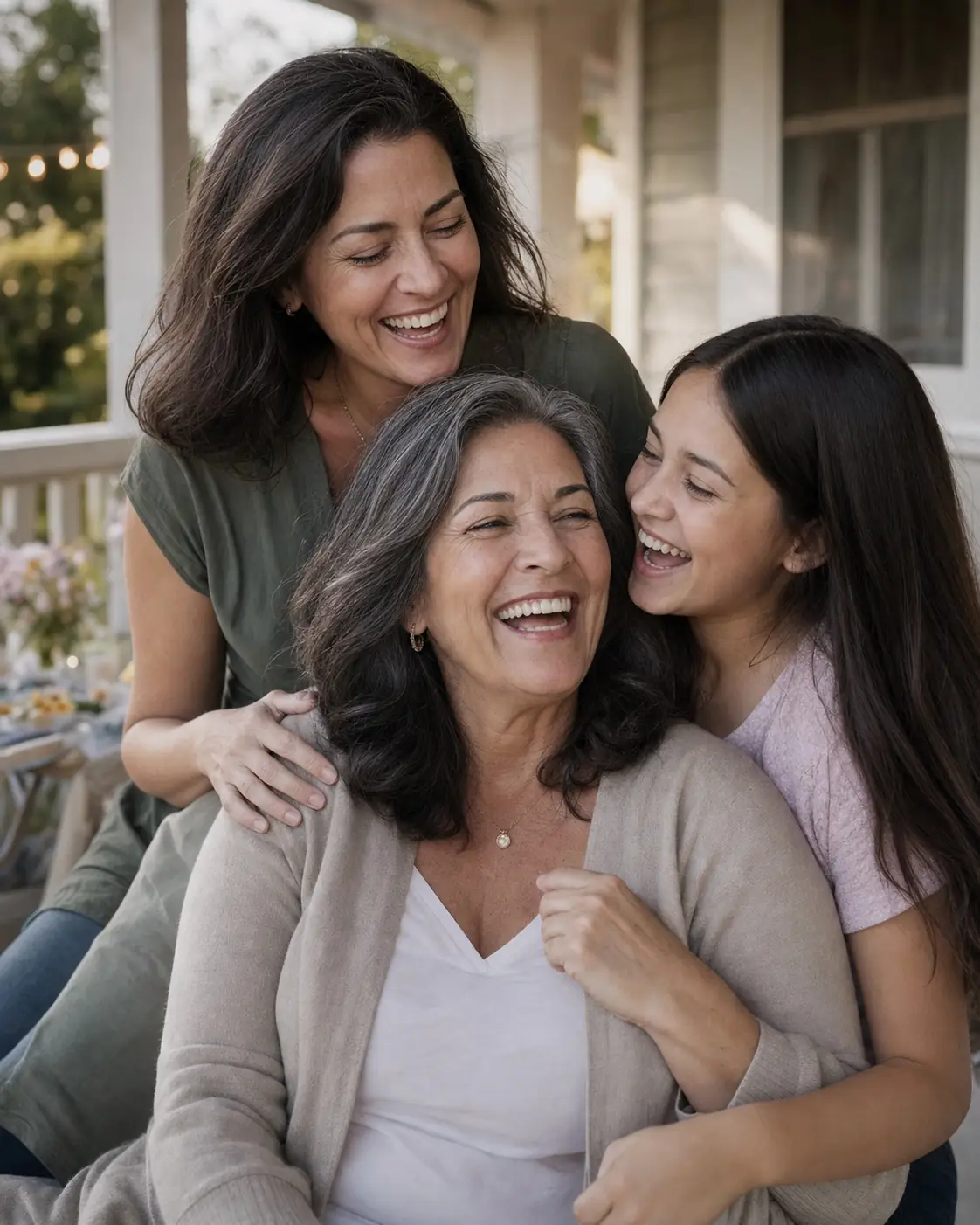
Reunions bring their own version of this. Multi-generational photos put grandmothers, mothers, and daughters in the same frame under the same light, and everyone’s hair is being asked to look its best at the same moment for a photo that’s going to hang on a wall for years. There’s no separate routine for that — the same press-don’t-sweep application that works for a Tuesday works for the porch photo, just budget the extra few minutes before the group gathers.
Pack a touch-up for the parts of the day you can’t plan for
Even a well-timed application can use a midday check-in on a twelve-hour day. A compact travel kit tucked into a clutch or jacket pocket means a 30-second touch-up in a venue bathroom is always an option — the same purse touch-up kit approach that works for any long day works especially well for one with a receiving line, a first dance, and a sparkler exit all on the same schedule.
Get your shade settled before the day, not during it
Event day is the worst time to discover you brought the wrong compact. If you’re between two shades or your hair color has shifted since you last checked, sort it out during a calm run-through beforehand rather than in a venue bathroom mirror. Our shade matching guide walks through choosing between Dark Brown, Black, Light Brown, and Red, and the same rule applies here as anywhere: when in doubt, go slightly darker and apply lightly.
What it does and doesn’t do
Worth saying plainly, because event days come with high expectations. Scalp coverage powder is cosmetic — it changes how thinning or a visible scalp looks for as long as it’s on, and it has no effect on hair growth in either direction, before, during, or after the event. If your thinning is new, spreading quickly, or comes with itching or flaking, that’s worth a conversation with a board-certified dermatologist rather than something to solve with a compact.
For everything else — a long day, a crowded dance floor, a photographer who won’t stop finding new angles — the goal is simple: look like yourself, and let the day be about the people in it instead of your part line.
Getting ready for a big day? Shop Thicken It 100% Scalp Coverage Powder →
Related reading: Ponytail Thinning Coverage: Hiding the Gaps a Pulled-Back Style Reveals · The Purse Touch-Up Kit That Goes Everywhere You Do · Water Resistant Hair Powder: Does It Survive Sweat and Swimming? · Scalp Powder Application Mistakes (and the Easy Fixes) · How to Match Scalp Powder Shade to Your Hair